When The Network Cannot Fail: How Graphiant Uses AI Agents To Raise The Bar On Quality And Velocity
.png)
Picture a storm moving through the region where one of our customers operates a distribution center. A last-mile link degrades. Traffic that matters, the kind that keeps trucks loaded and shelves stocked, must find another path in an instant, without anyone noticing.
This is the standard Graphiant is built to meet. Our customers route their most critical traffic across our network, so simply working is not enough. Our platform must hold up under brownouts, failovers, congestion, security rekeys, and software upgrades, the full complexity of real production networks. Earning that trust every day, at the velocity our customers require, is the real engineering challenge.
It is also where we have found AI agents to be genuine force multipliers for our engineering teams. They do not replace human judgment; they clear the way for it to move faster. Here is how we put them to work.
Every change we make passes through a series of automated quality gates before it ever reaches a customer network. Nothing ships on faith. It ships on evidence.
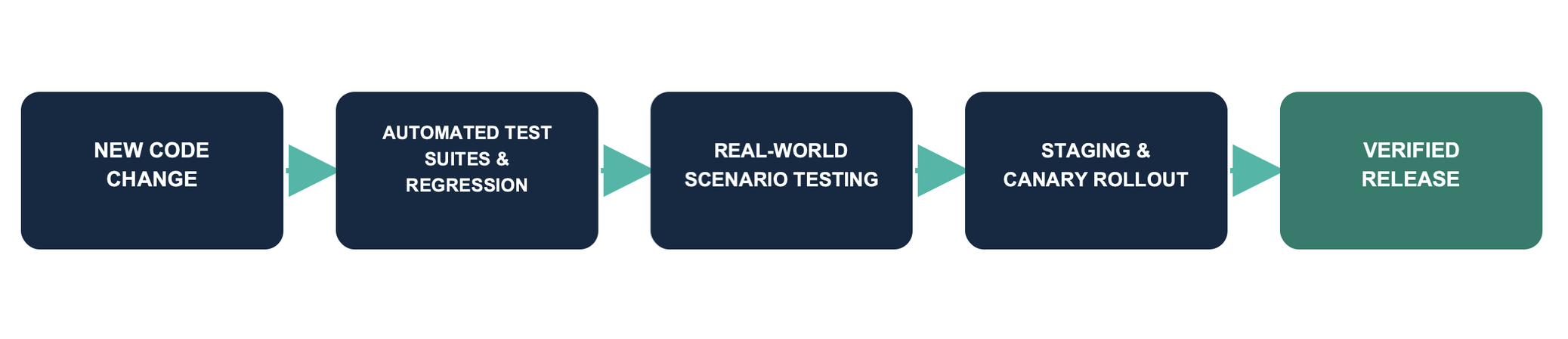
This pipeline runs continuously, on every change, so quality is built in from the first commit rather than checked at the end. It is also designed to catch more than the failures that appear every time. The harder, more dangerous bugs are the intermittent ones, race conditions, spikes and slow leaks in resource use, and crashes anywhere across our distributed devices and services.
Left unaddressed, these are exactly the kind of problems that stay hidden. Retries and resource over provisioning quietly mask the symptoms, and the underlying bugs are complex and difficult to reproduce on demand. Without AI agents deliberately hunting for them running the same real-world conditions repeatedly, at scale, most would remain buried until a customer discovered them first.
Passing those gates is not the final checkpoint, either. Every change moves through a ladder of environments, each stricter than the last, before it reaches a customer. Promotion from one stage to the next, and the checks and tests that gate each step along the way, are fully scheduled and automated no one has to remember to kick off the next run or manually usher a change from one environment to the next.
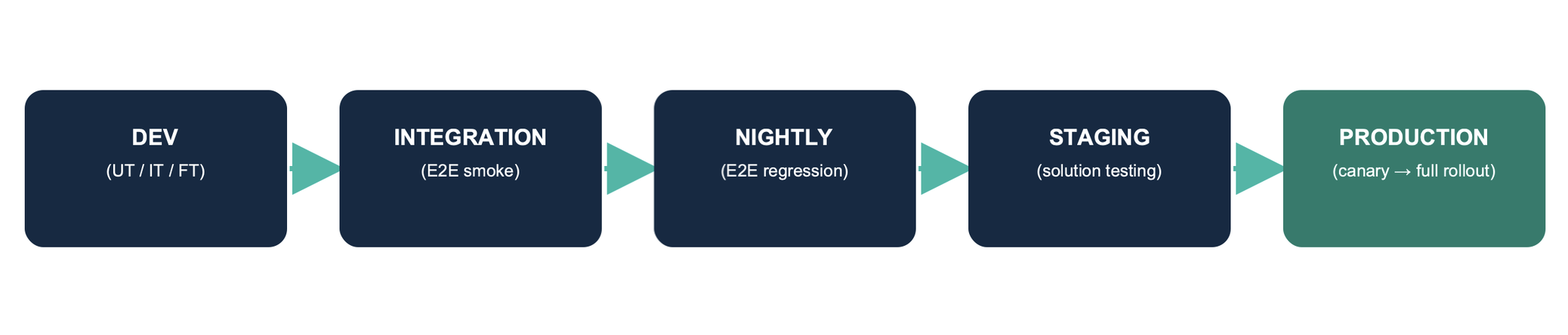
Only after a full nightly regression pass and a period in staging does a change receive a small, closely monitored canary release in production, before it reaches our broader customer base. One of the earliest and most demanding proving grounds along that ladder is our own front door: Graphiant runs on Graphiant. Our own corporate network operates on our platform, just as any enterprise customer's would the same product, held to the same standard. If it is not good enough for us to trust with our own traffic, it does not ship to yours.
Static test plans can only cover what someone thought to write down. Real networks are far more inventive than that. They fail in combinations, latency compounded by packet loss, a failover during a spike in congestion, a security rekey in the middle of an upgrade.
So we go a step further. Every day, an AI agent generates a fresh set of real-world "network event" scenarios for our quality engineers: last-mile failovers, brownout-triggered path switches, congestion under load, seamless security rekeys, zero-touch provisioning, and more. These scenarios are deliberately rotated so that, over time, every part of the system is exercised in a new way. No two days look the same, and coverage never grows stale.
The work does not stop at generating the scenario. AI agents can also pick it up and run it end-to-end, with every execution visible to, and approved by, the engineers accountable for the outcome. Generation and execution both move faster; the final sign-off remains firmly human.

Fast, thorough testing surfaces a great deal of signal, and speed matters just as much in how we respond to it. The moment something fails, our systems do not wait for a person to notice.
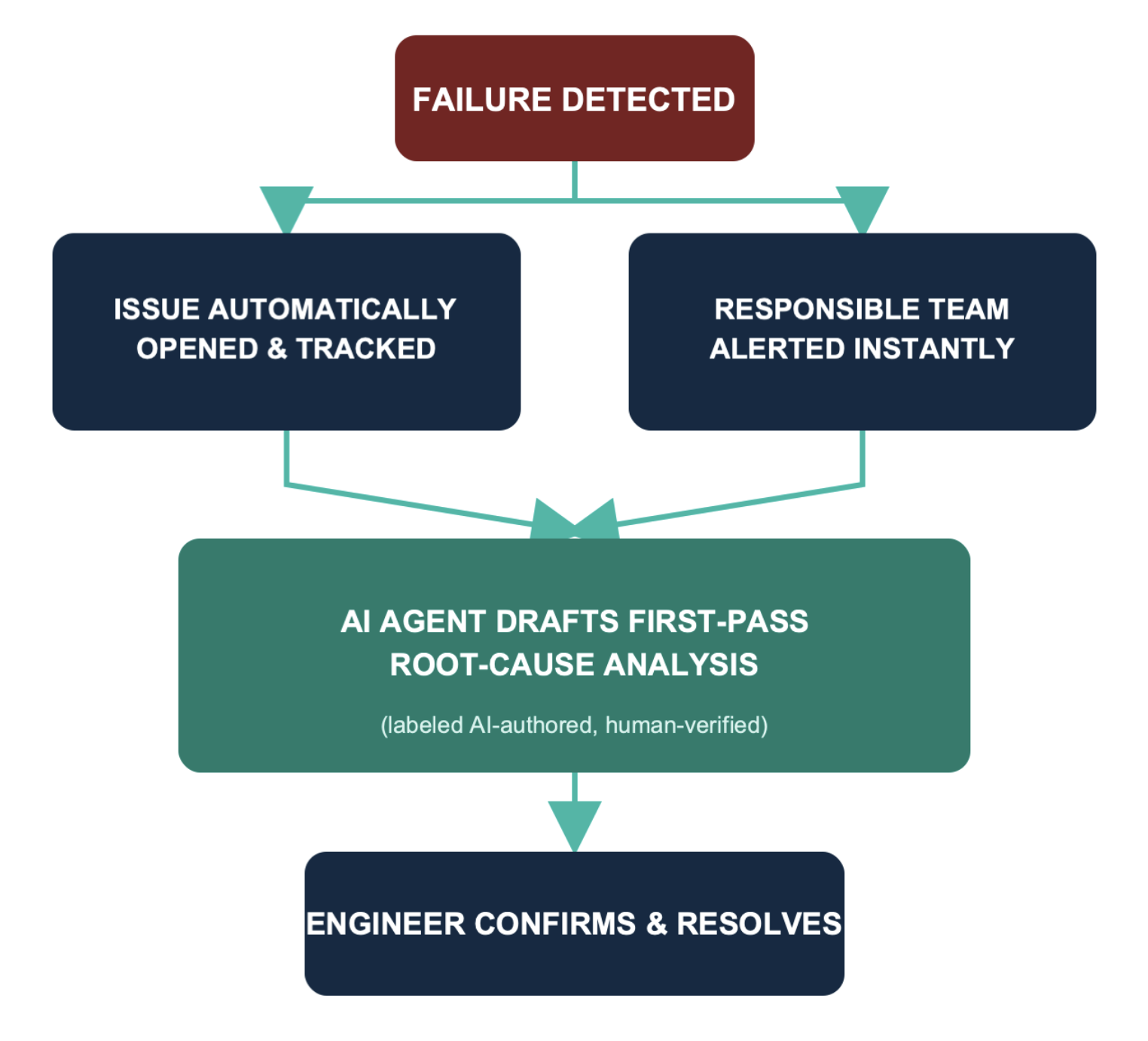
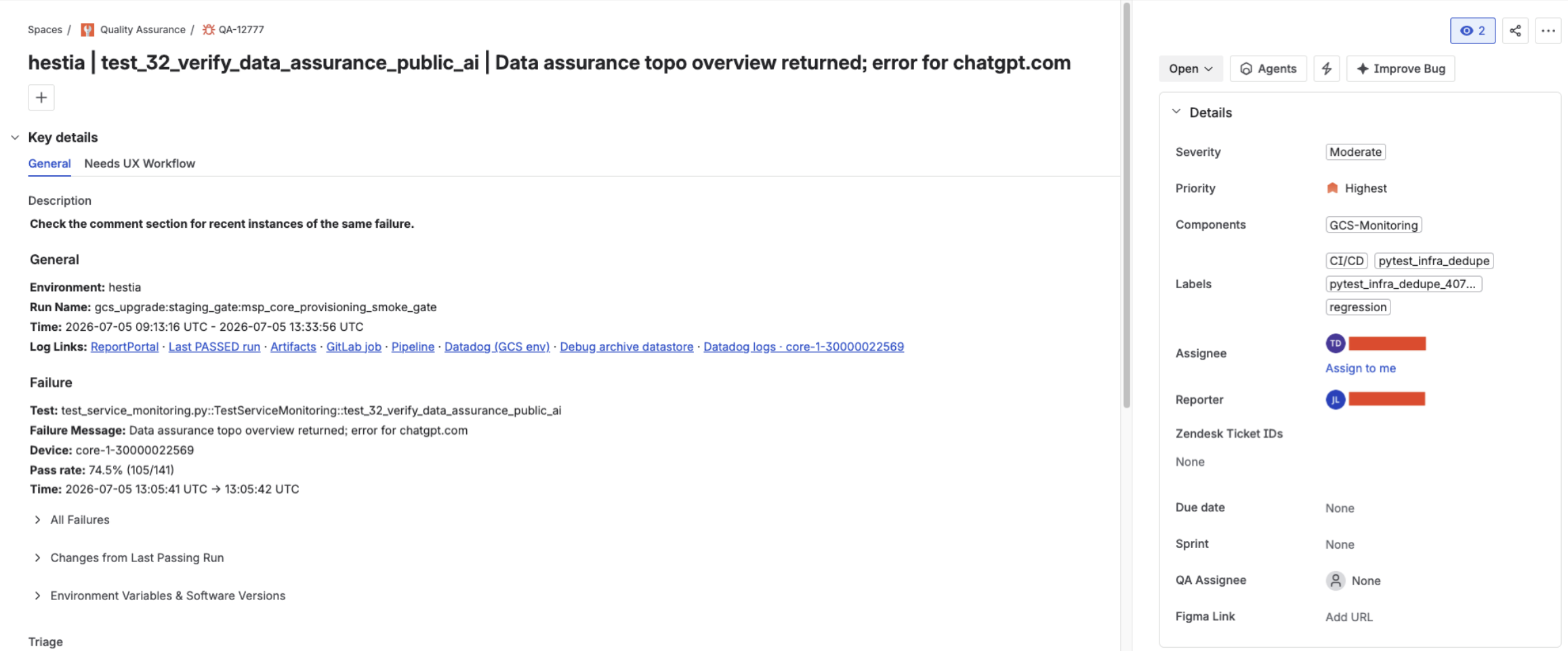
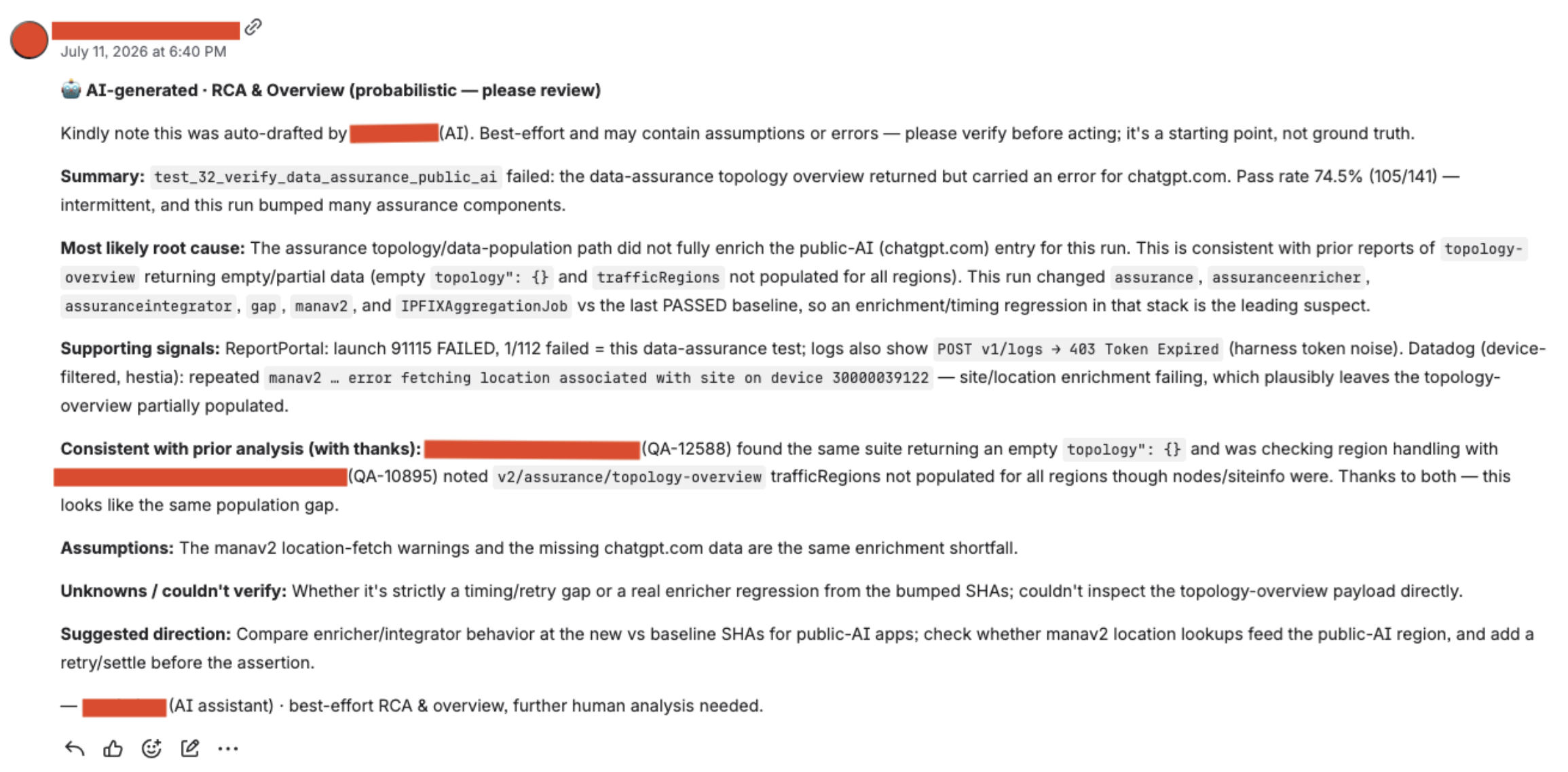

What once took an on-call engineer considerable time piecing together logs, timelines, and history before real debugging could even begin now arrives already assembled. An AI agent gathers the relevant context, drafts a probable explanation, and connects the new issue to similar ones the team has solved before.
We hold to one principle without exception: our AI agents accelerate our engineers; they do not replace their judgment. Every AI-assisted analysis is clearly marked as a starting hypothesis, not a verdict, and engineers verify it before anything is treated as fact. This keeps trust high and keeps humans firmly in charge of every decision that matters.
Our customers get the same AI-powered leverage in their daily operations. GINA, our AI-powered network assistant, is built into both the Graphiant NaaS portal (https://portal.graphiant.com/) and the Graphiant support portal (https://support.graphiant.com/), where customers use it for daily standups and for troubleshooting and monitoring their networks (https://www.graphiant.com/resources/meet-gina-ai-your-new-ai-powered-network-assistant-for-daily-standups-and-operational-insights).
GINA is only as good as the data beneath it, which is why she leans heavily on our real-time, comprehensive monitoring and troubleshooting dashboards — the same Site Health Dashboard that gives customers full visibility into their network's health (https://www.graphiant.com/resources/product-demo-graphiant-site-health-dashboard).
Put these pieces together and they do not simply add up. They compound:
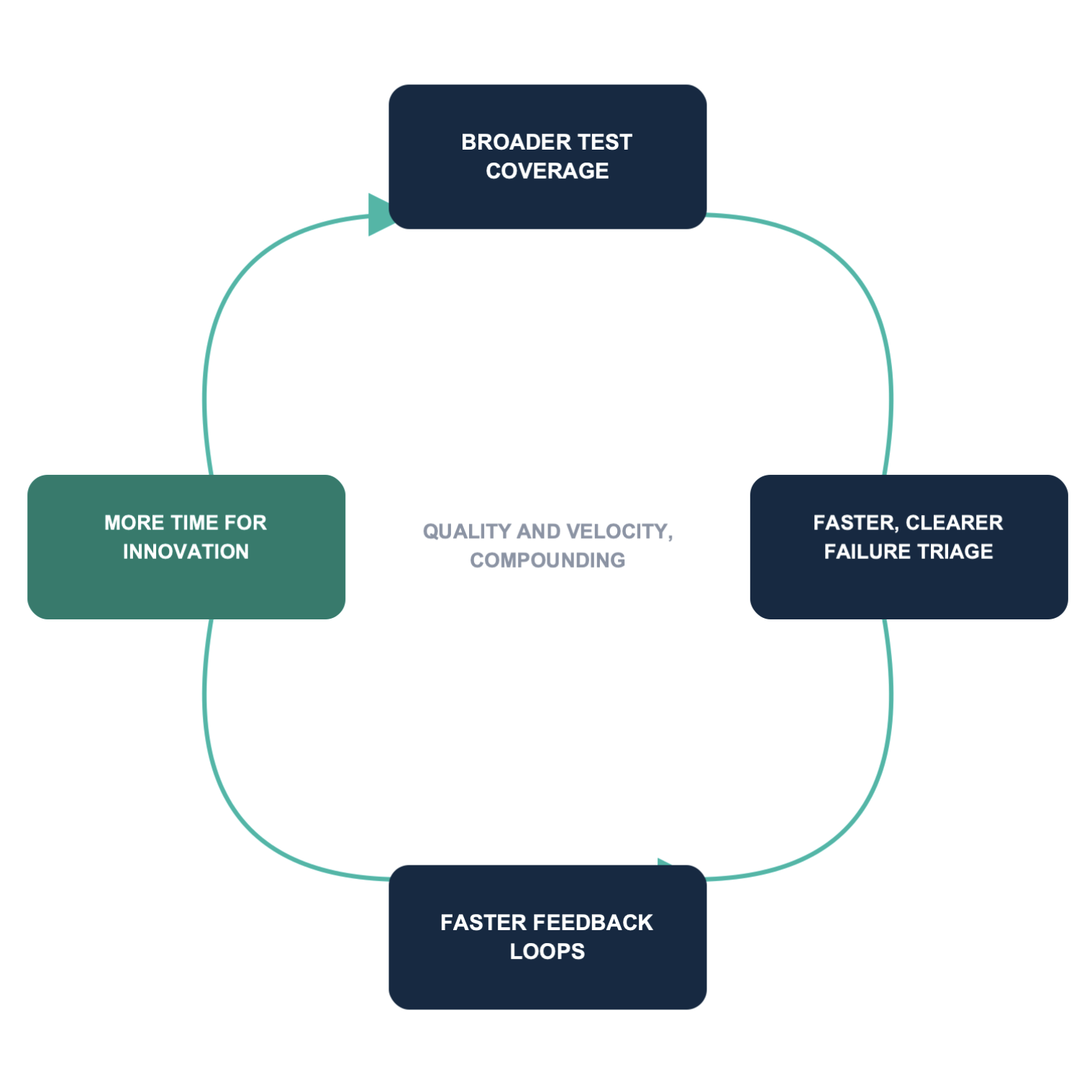
Broader coverage leads to faster, clearer answers when something goes wrong. Faster answers produce faster feedback loops. And faster feedback loops free up time that our engineers reinvest in the next hard problem: better tests, better designs, better products. Quality and speed are not a trade-off here. Each one earns the other.
None of this replaces the expertise of our engineering teams. It gives them leverage. Our AI agents handle the repetitive groundwork, tirelessly and around the clock, so our people can focus on what only they can do: designing for the real world, solving hard problems, and advancing the product.
At Graphiant, quality and velocity move together. Pairing human expertise with AI agents built to raise the bar on both is what allows us to keep innovating quickly, and it shows, every day, in a more reliable and more resilient network for the customers who depend on us.
Curious how we are applying AI across engineering? We are just getting started. Stay tuned.
.png)